The Algerian Sahara, where travel regains its meaning
Sometimes an image can express what words struggle to convey.
In 2025, National Geographic Traveler selected a photograph of the Algerian Sahara as one of the 15 best travel photos in the world.
This rare and demanding distinction goes beyond simple aesthetic prowess to reveal a profound truth: the Algerian Sahara is not just a backdrop.
It is a world unto itself.
In a media landscape saturated with spectacular images, this photograph stands out for its restraint, accuracy, and silent power.
It conveys immensity, but also human presence.
It reminds us that the Algerian desert is one of the last places where travel still retains its original meaning: that of encounter, of time and of the essential.
The Algerian Sahara is not a place to visit. It is a place to cross, to listen to, to respect.
Why National Geographic chose the Algerian Sahara in 2025
Each year, National Geographic Traveller publishes an editorial selection of the most striking travel images from around the world.
This is neither a tourist ranking nor a popular contest, but a journalistic choice based on three fundamental criteria: narrative strength, authenticity of the territory, and the image’s ability to embody the very essence of travel.
For the 2025 edition, the editorial team has highlighted destinations that are still unspoiled, far from the overcrowded tourist routes.
In this context, the Algerian Sahara was an obvious choice.
At a time when global tourism is seeking to reinvent itself, it embodies a rare and raw, almost primal form of travel, where the human experience takes precedence over tourist performance.
Where was the National Geographic photo of the Algerian Sahara taken?
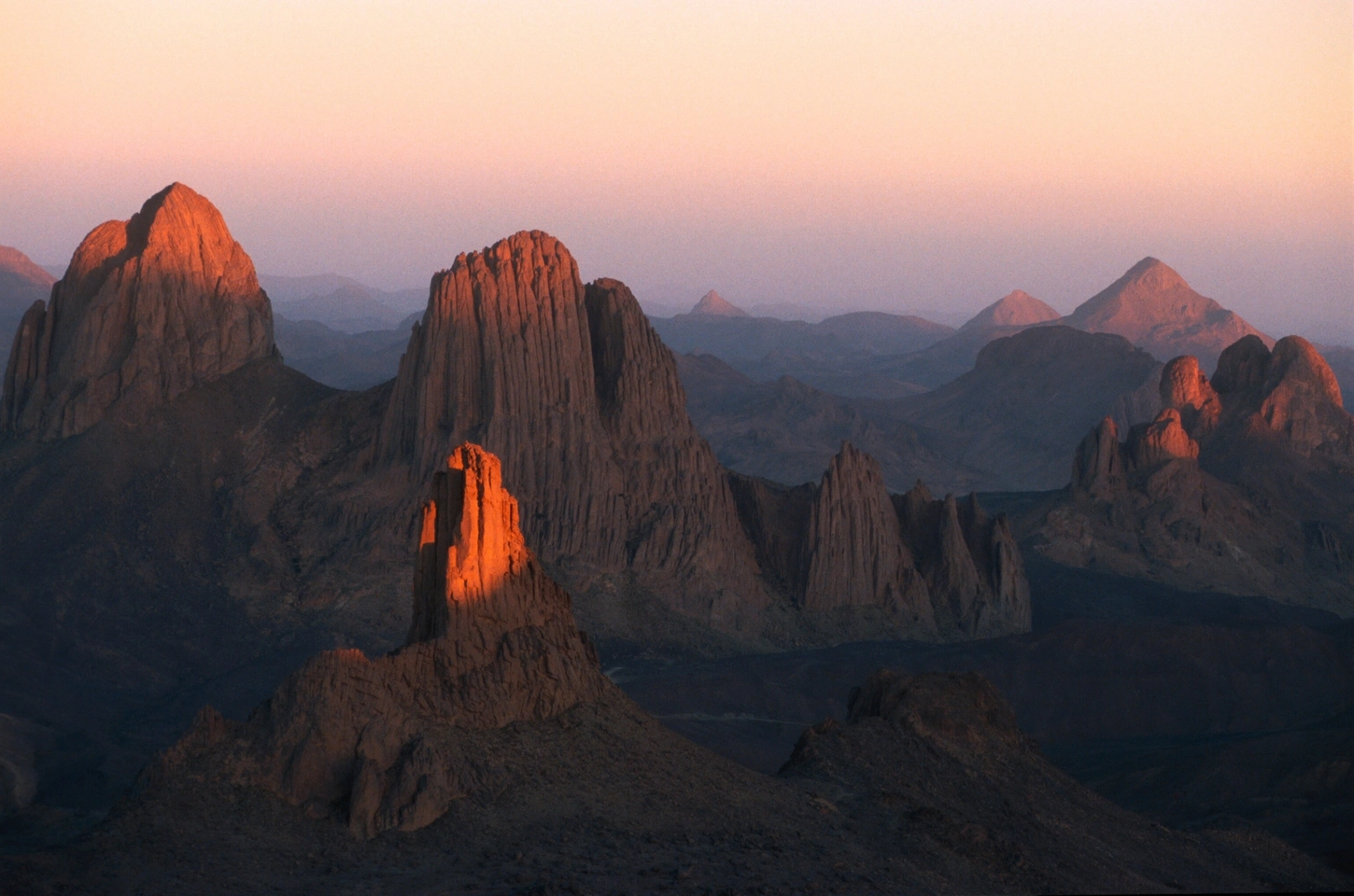
The selected photograph was taken in the Hoggar Mountains, in southern Algeria, in the Tamanrasset region.
https://guidealgerie.com/ville/tamanrasset/
This spectacular volcanic territory is one of the most impressive landscapes in the central Sahara.
The Hoggar is characterized by:
- basalt rock peaks shaped by millions of years of erosion
- mineral plateaus stretching as far as the eye can see
- exceptionally intense raking light
- and an almost absolute silence, disturbed only by the wind
In the image, a human silhouette appears, tiny in the face of immensity.
A Tuareg guide, almost imperceptible, but essential.
This detail gives the photograph its depth: it reminds us that the Algerian Sahara is a territory that has been inhabited, passed down and lived in for centuries.
The Algerian Sahara: a desert with many faces
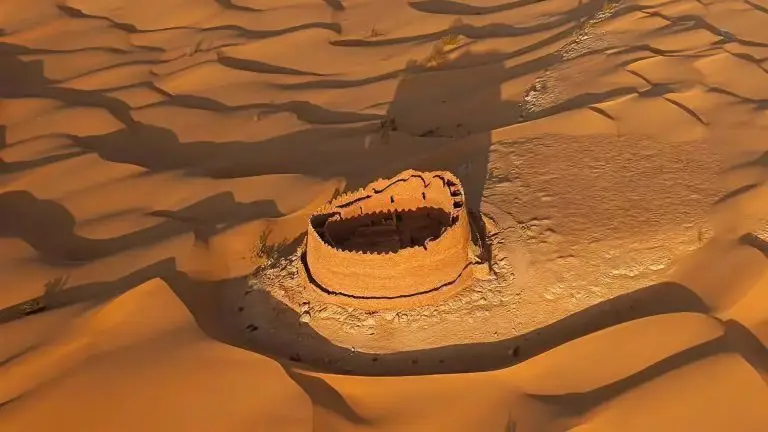
Covering more than two million square kilometers, the Algerian Sahara is one of the largest and most diverse desert regions in the world.
Contrary to popular belief, it is not just a uniform expanse of dunes.
Here we find:
- the Hoggar and its monumental volcanic reliefs
- Tassili n’Ajjer, a UNESCO World Heritage Site for its rock paintings
- shifting sand dunes
- millennial oases springing up in the heart of the arid landscape
- and completely untouched areas, accessible only with local guides
This geographical and cultural diversity makes the Algerian Sahara an exceptional destination, capable of appealing to a wide variety of travelers: adventurers, photographers, researchers, cultural explorers, and contemplative travelers.
A Saharan micro-scene
At dawn, the desert is still. The sand is still cold underfoot. The sky slowly shifts from deep blue to ochre.
There is no sound except for the slight rustling of the wind against the rocks.
At this precise moment, the Algerian Sahara does not put on a show. It simply allows itself to be.
It is this rare, almost intimate feeling that the photograph selected by National Geographic manages to capture.
Can you visit the Algerian Sahara today?
Yes. The Algerian Sahara is accessible to travelers, within a structured, regulated, and supervised framework.
Tours are organized by specialized agencies and certified guides, in conjunction with local authorities.
This type of trip is mainly aimed at:
- experienced travelers,
- lovers of immersive experiences,
- photographers and documentary filmmakers,
- high-end travelers seeking exceptional experiences,
- and cultural explorers in search of meaning.
The Algerian Sahara is not a destination for quick consumption.
It is a profound experience that requires time, serious preparation, and a genuine inner disposition toward slowness.
When to visit the Algerian Sahara
The ideal time to discover the Algerian Sahara is from October to March.
The temperatures are milder, allowing for travel, hiking, and camping in good conditions.
Each season offers a unique atmosphere:
- autumn for its golden light
- winter for its starry nights and absolute silence
- early spring for its contrasting colors
Why the Algerian Sahara fascinates photographers from around the world
National Geographic ‘s recognition confirms what is obvious to image professionals: the Algerian Sahara is one of the most visually powerful territories in the world.
Its assets are exceptional:
- unique low-angle lighting
- remarkably pure skies
- spectacular mineral contrasts
- rare but deeply symbolic human scenes
Photographing the Algerian Sahara is not about accumulating images.
It is about learning to wait, to observe, to come to terms with silence and immensity.
The Algeria Guide’s opinion
National Geographic Traveller’s spotlight on the Algerian Sahara is a strong signal for Algeria.
It confirms that the country has territories capable of competing with the world’s greatest destinations for exceptional tourism.
For Guide Algérie, this recognition reinforces an essential conviction: the Sahara is not a mass tourism product.
It is a natural and human heritage of inestimable value, which must be promoted with respect, high standards, and a long-term vision.
Conclusion: when an image reveals the Algerian Sahara
The photograph selected by National Geographic Traveller in 2025 celebrates more than just a landscape.
It reveals a territory, a culture, and a way of inhabiting the world.
The Algerian Sahara is no ordinary destination.
It is a formative experience, an encounter with the essential, an invitation to rediscover the deeper meaning of travel.