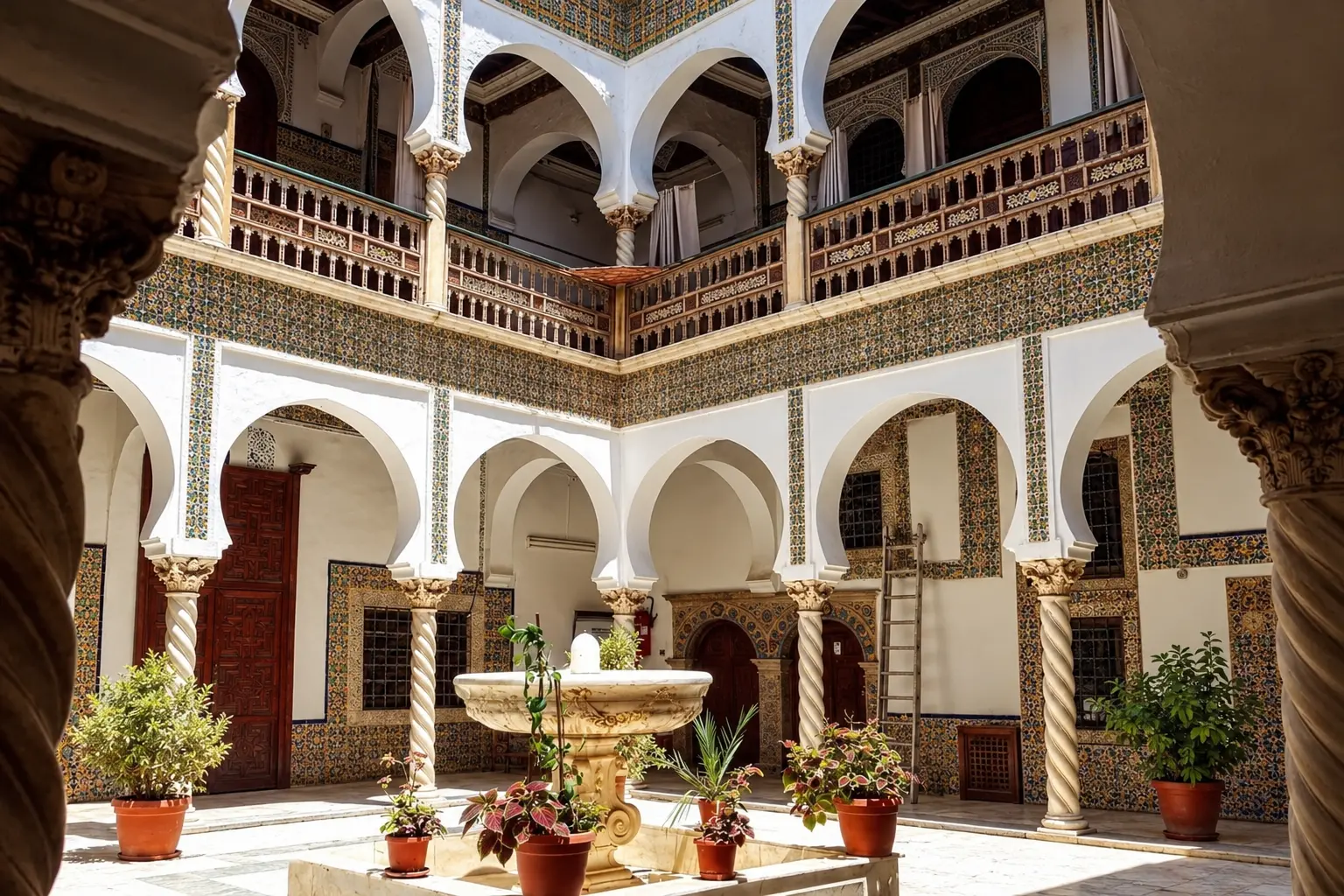
Overlooking the Bay of Algiers, the Casbah is much more than just a historic neighborhood: it is the living memory of the Algerian capital.
Behind its white facades lie Ottoman palaces, ancient mosques, traditional houses, artisans’ workshops, and a fascinating network of winding, stair-step alleys.
Listed as a UNESCO World Heritage Site since 1992, the Casbah is an exceptional example of a Mediterranean medina.
Its architecture bears witness to several centuries of history and numerous cultural influences. Source: UNESCO
What to see in the Casbah of Algiers? Here are the must-see landmarks, the best walking route, and all our tips for a successful visit.
Why visit the Casbah of Algiers?
Built on a hill facing the Mediterranean, the Casbah is a true city within a city. Its urban layout adapts perfectly to the terrain: the white houses seem to stack one on top of the other, while the narrow streets gradually descend toward the sea.
This historic neighborhood offers a chance to discover:
- Algiers’ Ottoman heritage
- the architecture of traditional houses
- the history of the War of Independence
- the capital’s ancient mosques
- Algerian crafts
- Magnificent panoramic views of the Bay of Algiers
According to UNESCO, the Casbah has had a significant influence on architecture and urban planning in North Africa, Andalusia, and certain regions of sub-Saharan Africa.
1. The Citadel of Algiers or Dar Soltan
Located at the top of the Casbah, the Citadel of Algiers is an excellent starting point for your visit.
Also known as Dar Soltan, it served as the seat of power during the Ottoman period. It once formed a vast political, military, and residential complex comprising palaces, courtyards, a mosque, and various administrative buildings.
From the Upper Casbah, you can also enjoy beautiful views of the rooftops of Algiers and the Mediterranean Sea.
Some parts of the site may be temporarily closed due to restoration work. Be sure to check access conditions before your visit.
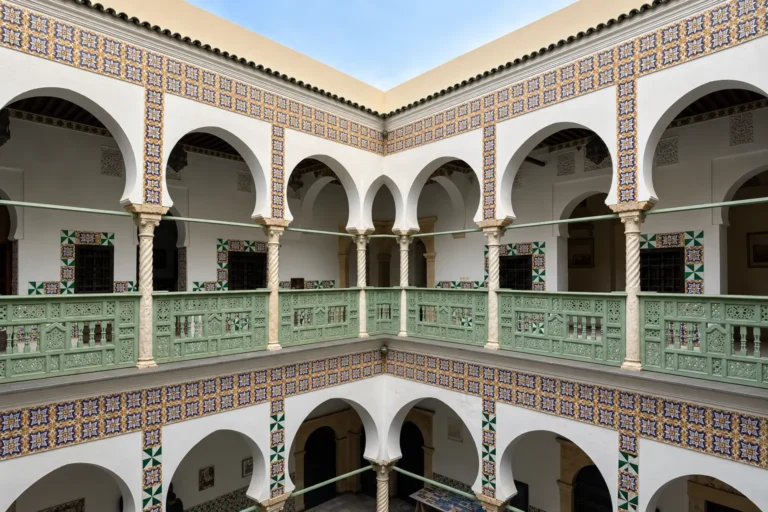
2. The Alleys of the Upper Casbah
The Casbah offers more than just its monuments. Its greatest treasure lies in its maze of narrow streets, stairways, vaulted passageways, and small squares.
As you explore the Upper Casbah, take a close look at:
- the finely decorated ancient doors
- the whitewashed facades
- the balconies and mashrabiya screens
- public fountains
- houses arranged around a courtyard
- small neighborhood shops
- unexpected views of the bay.
The Casbah is still inhabited. As a result, it retains a strong sense of community, which UNESCO considers an essential element of its heritage value.
Please respect the residents’ peace and quiet, and always ask for permission before photographing a person or the interior of a home.
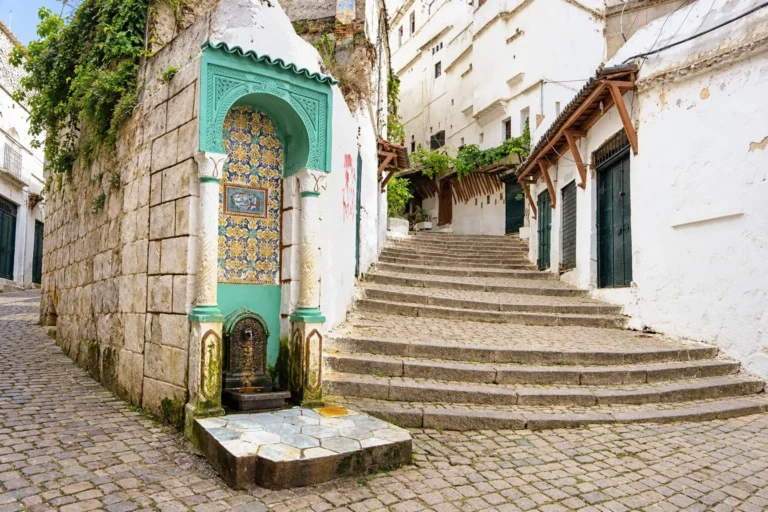
3. The Sidi Ramdane Mosque
The Sidi Ramdane Mosque is considered one of the oldest mosques in the Casbah.
Its simple architecture contrasts with that of the grand Ottoman buildings located in the lower part of the neighborhood. It stands as a valuable testament to the various historical periods Algiers has experienced.
Its peaceful surroundings also offer a chance to discover a more authentic and less crowded part of the Upper Casbah.
As in all places of worship, appropriate attire and a respectful attitude are essential.
4. The House of Ali La Pointe
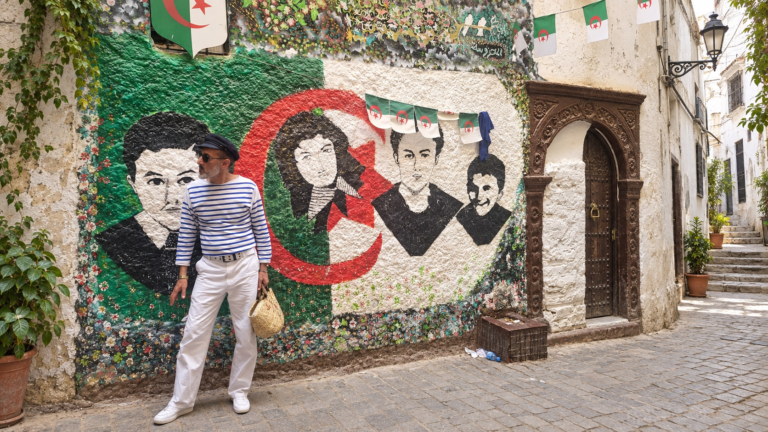
Ali La Pointe’s House is one of the Casbah’s most significant historical sites.
It commemorates the story of Ali Ammar, nicknamed Ali La Pointe, as well as that of Hassiba Ben Bouali, Mahmoud Bouhamidi, and the young Omar Yacef, known as Petit Omar. All of them were killed in 1957 when the house where they were hiding was destroyed during the Battle of Algiers.
This visit provides a better understanding of the Casbah’s strategic role during the War of National Liberation. It is a particularly moving historical stop.
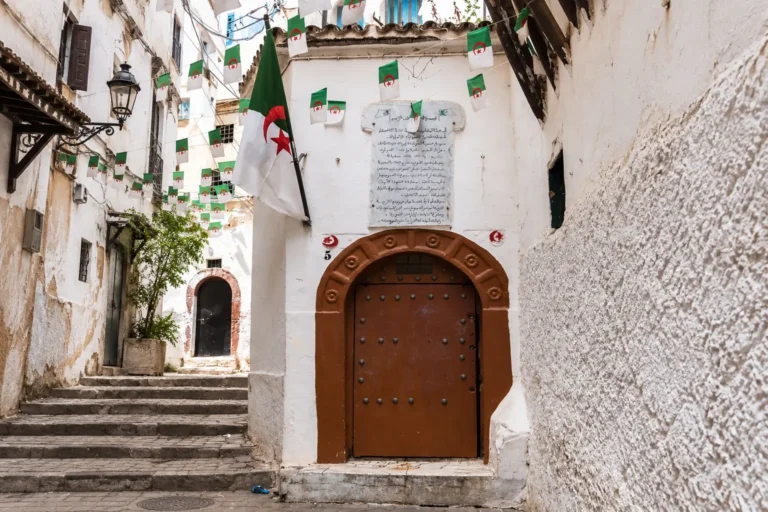
5. Dar Mustapha Pasha
Built in the late 18th century, the Mustapha Pasha Palace is one of the most beautiful Ottoman residences in Algiers.
Behind its unassuming façade lie an inner courtyard, columns, carved arches, woodwork, and a remarkable collection of earthenware tiles.
The palace perfectly exemplifies the architecture of traditional Algerian mansions: the rooms are arranged around a central patio that provides light, coolness, and privacy.
Dar Mustapha Pasha is a must-see for lovers of architecture, interior design, and history.
6. Dar Aziza
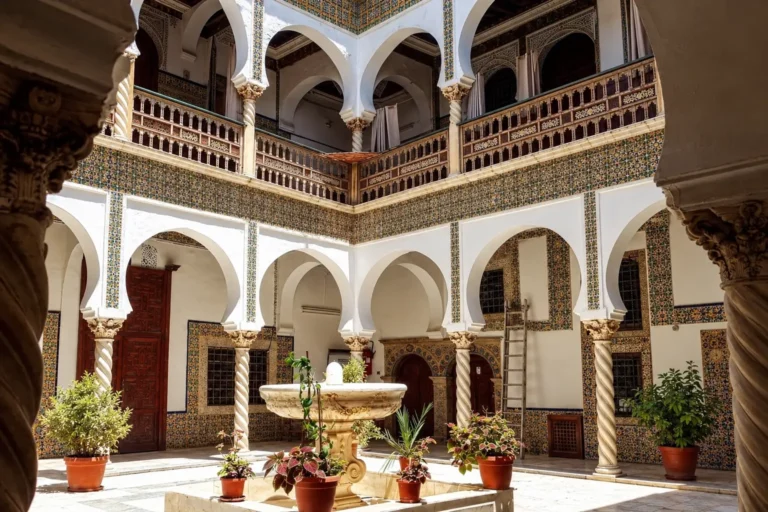
Located near Martyrs’ Square, Dar Aziza is one of the few palaces in the Djenina district to have stood the test of time.
Its architecture features an interior courtyard surrounded by galleries, marble columns, arches, and traditional decorative elements.
Depending on the time of year, access to the interior may be restricted. Even so, the monument is worth a stop while exploring the Lower Casbah.
7. Dar Hassan Pasha
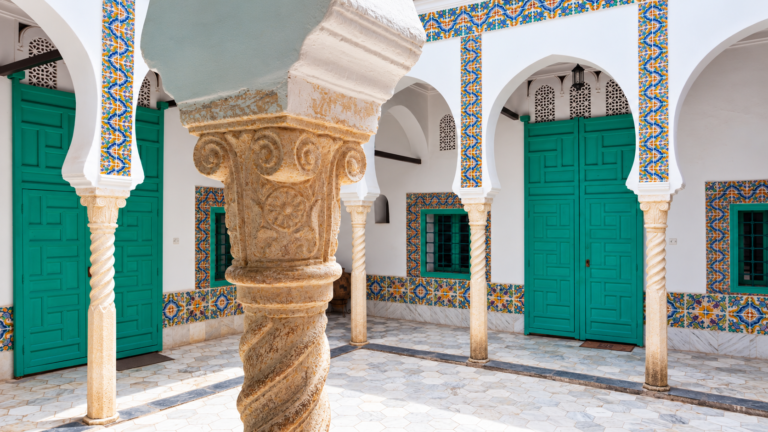
Just a few steps from the Ketchaoua Mosque stands Dar Hassan Pasha, built in the late 18th century.
This palace was the residence of Hassan Pasha, former governor of Algiers. It features a remarkable blend of Ottoman and Mediterranean influences.
Its interior decor, courtyards, and reception rooms attest to the refinement of Algiers’s palatial architecture. However, its opening to the public depends on restoration schedules and events held on-site.
8. The Ketchaoua Mosque
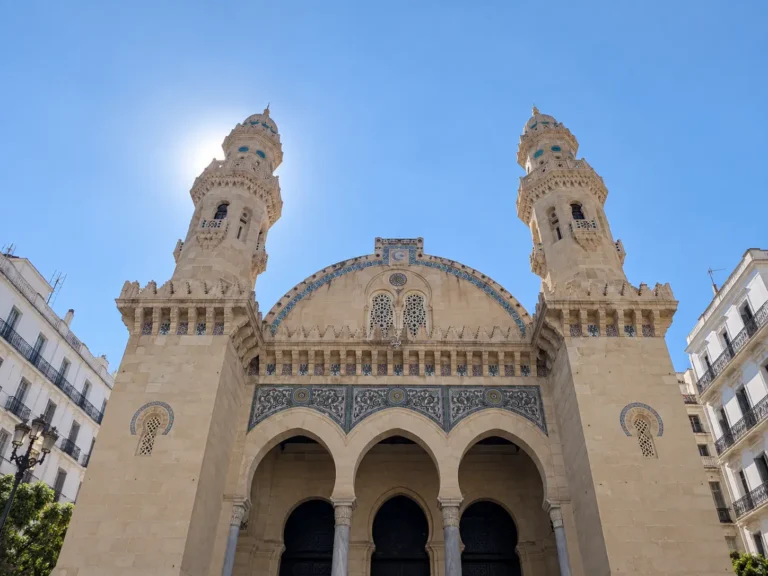
Located at the foot of the Casbah, the Ketchaoua Mosque is one of the capital’s most iconic landmarks.
Built during the Ottoman period, converted into a cathedral during French colonization, and then returned to Muslim worship after independence, it bears the marks of the various periods in Algiers’ history.
Its grand staircase, two minarets, and monumental façade dominate the square at the entrance to the Casbah.
To explore its interior architecture, avoid prayer times and wear clothing appropriate for the religious nature of the site.
9. The Mausoleum of Sidi Abderrahmane
Sidi Abderrahmane Et-Thaâlibi is considered the patron saint of Algiers. His mausoleum is one of the city’s most important spiritual sites.
The complex is distinguished by its domes, ceramic tiles, woodwork, and peaceful atmosphere. It offers a glimpse into an essential aspect of Algiers’ religious heritage.
The site welcomes both worshippers and visitors. It is therefore advisable to dress modestly and respect religious practices.
10. Martyrs’ Square
Martyrs’ Square is one of the main gateways to the Lower Casbah.
Formerly known as Government Square, it occupies a central location between the old city and the waterfront. From here, you can quickly reach the Ketchaoua Mosque, Dar Aziza, and several other historic monuments.
The square is served by the Algiers metro, making it a convenient meeting point to begin or end your visit.
11. Bastion 23 or the Palace of the Raïs
Located facing the sea, near the Lower Casbah, the Palace of the Raïs is better known as Bastion 23.
This architectural complex includes several palaces and fishermen’s houses dating from the Ottoman period. Its courtyards, galleries, terraces, and views of the Mediterranean make it one of Algiers’ most beautiful cultural sites.
Bastion 23 also hosts temporary exhibitions and various artistic events. Be sure to allow enough time to explore the buildings and enjoy the panoramic views.
12. Artisans and Traditional Houses
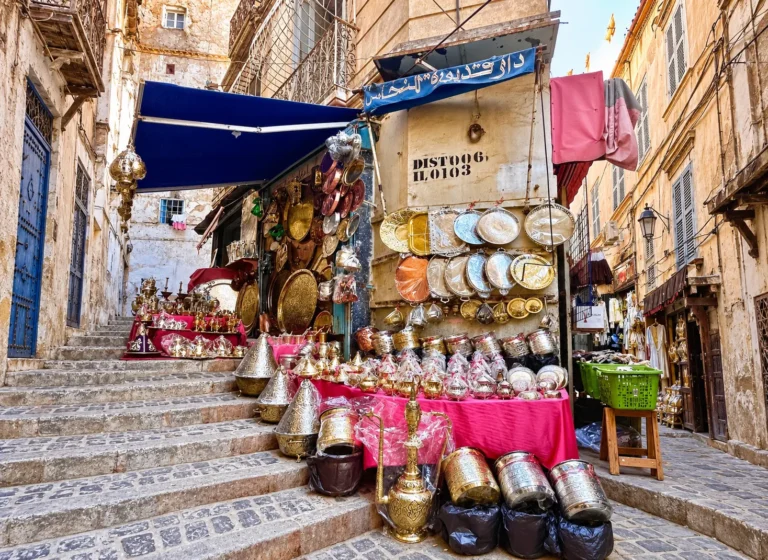
To experience the soul of the Casbah, take the time to meet its artisans and discover their craftsmanship.
In particular, you’ll be able to watch them work with:
- copper
- carved wood
- leather
- embroidery
- jewelry
- ceramics
- traditional decorative objects.
Some restored houses can also be explored with a local guide. They feature light-filled patios, fountains, columns, and terraces offering remarkable views of Algiers.
Buying directly from artisans helps preserve traditional crafts and supports the local economy.
The Best Route for Visiting the Casbah
To avoid constantly climbing stairs, start with the Upper Casbah and then gradually make your way down toward the sea.
Recommended one-day itinerary
- Algiers Citadel
- Alleyways of the Upper Casbah
- Sidi Ramdane Mosque
- Ali La Pointe’s House
- Artisans’ workshops
- Mustapha Pasha Palace
- Dar Hassan Pasha
- Ketchaoua Mosque
- Dar Aziza
- Martyrs’ Square
- Bastion 23.
This itinerary combines history, architecture, crafts, and panoramic views.
Allow half a day for a quick tour and a full day if you’d like to visit the monuments, meet artisans, and take the time to photograph the neighborhood.
Should you visit the Kasbah with or without a guide?
It’s possible to explore certain areas on your own, but a guided tour is recommended for your first visit.
The narrow streets form a veritable labyrinth, and the monuments aren’t always easy to spot. A local guide can:
- help you find your way around the different neighborhoods
- explain the history of the landmarks
- take you to artisans’ workshops
- facilitate access to certain traditional houses
- introduce you to daily life in the Casbah
- tailor the itinerary to the length of your visit.
Choose a professional guide who is licensed or recommended by a reputable tourism organization.
How do you get to the Casbah of Algiers?
Martyrs’ Square is easily accessible by metro. It’s a convenient starting point for exploring the lower part of the Casbah.
To follow the downhill route, you can take a taxi or public transportation to the Upper Casbah, then finish your tour at Martyrs’ Square or Bastion 23.
Car traffic is very limited in the narrow streets. The tour is mainly on foot.
When is the best time to visit the Casbah?
Spring and fall offer the most pleasant temperatures for exploring the Casbah.
In summer, start early in the morning to avoid the intense heat. In winter or when it rains, be careful: some stairs and walkways can become slippery.
The morning light really brings out the beauty of the white facades. At the end of the day, the higher vantage points offer stunning views of the Bay of Algiers.
Practical tips before your visit
- Wear comfortable, non-slip shoes.
- Plan your visit for daytime.
- Bring water during hot weather.
- Check the hours before visiting palaces and museums.
- Respect the locals and places of worship.
- Ask for permission before taking photos of people.
- Avoid entering abandoned buildings or those under renovation.
- Keep your personal belongings close to you in crowded places.
- Bring cash for small purchases.
- Download a map before your visit, as it can be difficult to find your way around.
Where can you take the best photos of the Casbah?
The best vantage points are generally found:
- on the higher elevations of the Casbah
- from certain terraces accessible with a guide
- around the Citadel
- in the narrow streets overlooking the sea
- in front of the Ketchaoua Mosque
- in the courtyards of Dar Mustapha Pacha
- on the terraces of Bastion 23.
For the best photos, visit early in the morning or late in the afternoon.
FAQs About Visiting the Casbah of Algiers
How long does it take to visit the Casbah?
Plan on at least three to four hours. A full day is best for visiting the main landmarks, exploring the artisans’ workshops, and strolling through the neighborhood at a leisurely pace.
Can you visit the Casbah on your own?
Yes, certain areas can be explored on your own. However, a local guide is recommended to avoid getting lost and to better understand the neighborhood’s history.
Is visiting the Casbah difficult?
The Casbah features many stairs, slopes, and uneven alleyways. A normal level of fitness is sufficient, but sturdy shoes are essential. The route may be more challenging for people with limited mobility.
Is the Casbah suitable for children?
Yes, provided you plan a reasonable route and keep a close eye on younger children on the stairs. A guided and interactive tour will make the experience more interesting for the whole family.
What souvenirs should you buy in the Casbah?
You can buy copperware, pottery, jewelry, leather goods, embroidery, or handmade crafts. Opt for locally made products.
Can you visit the houses in the Casbah?
Some restored houses are open to the public or as part of guided tours. Private homes should never be visited without the occupants’ permission.
The Casbah: The Historic Heart of Algiers
Visiting the Casbah of Algiers means exploring several centuries of history in just a few hours. Its Ottoman palaces, mosques, white houses, and stair-step alleyways tell the story of the capital’s origins and transformations.
But the Casbah is not just an open-air museum. It remains a vibrant neighborhood, shaped by its residents, artisans, and traditions.
Take the time to walk around, observe the details, and listen to the neighborhood’s stories: this is how the Casbah truly reveals its identity.
Planning a trip to Algiers?
Also check out Guide Algérie for the most beautiful places to visit in the capital, the best activities, and our tips for planning your trip.