On the eve of World Tourism Day 2026, digital transformation is emerging as one of the major challenges facing Algeria as a tourist destination. Artificial intelligence, tourism data, online booking, smart mapping, and personalized recommendations are already reshaping the way travelers choose, plan, and experience their trips.
For Algeria, this evolution represents a real opportunity: to better showcase its regions, simplify the visitor experience, and build more bridges between travelers and local tourism stakeholders.
In short
- World Tourism Day 2026, celebrated on September 27, is dedicated to the theme “Digital Agenda and Artificial Intelligence to Rethink Tourism.”
- Algeria welcomed 3,548,405 tourists in 2024, representing a 7.77% increase compared to 2023.
- Tourism in the Sahara region recorded nearly 470,000 visitors between October 2025 and April 2026, including approximately 47,000 foreign tourists.
- The visa-on-arrival program for foreign tourists traveling to the southern provinces has benefited nearly 39,000 travelers from 120 countries since its implementation in 2023.
- Artificial intelligence can help Algeria as a destination personalize travel experiences, promote lesser-known regions, and make better use of tourism data.
Why is digital technology becoming strategic for tourism in Algeria?
Because today, the journey begins long before arrival at the airport.
Before booking a ticket or accommodations, travelers research their destination on Google, social media, booking platforms, digital maps, and AI assistants.
On September 27, 2026, World Tourism Day will be held under the theme “Digital Agenda and Artificial Intelligence to Rethink Tourism.”
According to the United Nations, artificial intelligence is already transforming the way travelers choose their destinations, the way industry professionals organize their businesses, and the way tourist experiences are designed. It can also empower small businesses, improve services, and create new opportunities for emerging regions.
For Algeria, this evolution represents a major opportunity.
The country already possesses the fundamentals of a major destination: the Sahara, the Mediterranean, historical and archaeological sites, a rich culinary tradition, artisanal expertise, ancient cities, and great cultural and natural diversity.
The challenge now is to make this wealth more visible, more accessible, and easier to discover and plan online.
How many tourists visit Algeria?
Tourist arrivals in Algeria are on the rise.
According to official data from the Ministry of Tourism and Handicrafts, Algeria welcomed 3,548,405 tourists in 2024, a 7.77% increase compared to 2023.
This total includes:
- 2,454,706 foreign tourists;
- 1,093,699 Algerians living abroad.
Foreign visitors thus accounted for just over 69% of the tourist arrivals recorded that year.
These figures illustrate not only Algeria’s potential as a destination but also the importance of offering a digital experience that meets travelers’ evolving expectations.
Today, a destination doesn’t just compete with other countries based on its landscapes or heritage.
It’s also judged on the ease of its digital experience.
Saharan tourism confirms Algeria’s potential as a destination
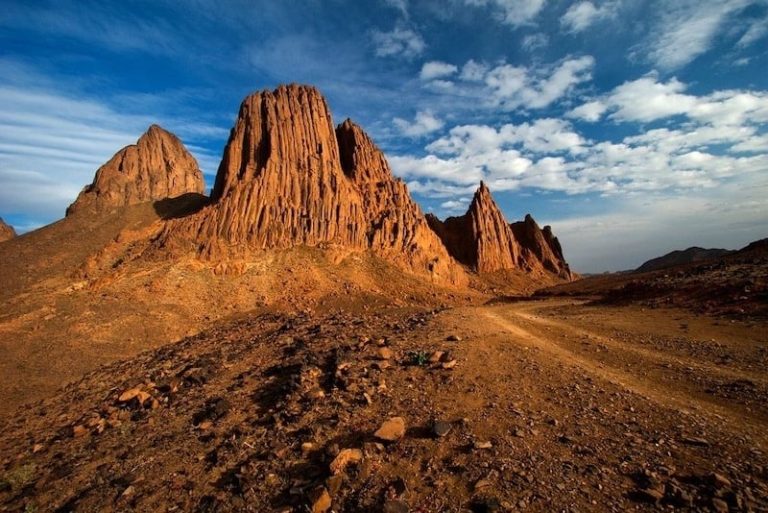
The Sahara is one of Algeria’s major tourist attractions.
Between October 2025 and April 2026, the southern provinces welcomed nearly 470,000 tourists, including approximately 47,000 foreign visitors.
Throughout 2025, nearly 750,000 people visited the southern provinces, including approximately 65,000 foreign tourists.
Djanet, Tamanrasset, Ghardaïa, Timimoun, La Saoura, and Gourara have considerable potential to attract visitors seeking scenic landscapes, cultural heritage, adventure, and cultural experiences.
Digital technology can enhance this appeal by allowing travelers to discover these destinations right from the moment they begin planning their trip.
How do travelers plan their trips these days?
Travelers are no longer just looking for a destination.
They’re looking for a specific solution to their needs.
- What can I do in Algiers for three days?
- Where to stay in Timimoun?
- When is the best time to visit Djanet?
- How do you get from Constantine to the Sahara?
- How much should you budget for ten days in Algeria?
- How do you plan a tour of the south?
- Which guides, restaurants, accommodations, or activities should you choose?
- Can you get a visa on arrival for a trip to the Sahara?
These questions are now being asked of both search engines and artificial intelligence assistants.
For Algeria, the challenge is therefore no longer simply about having an online presence.
It’s about building a true digital tourism experience, capable of guiding visitors from the initial inspiration through trip planning and, in the future, during their stay.
How can artificial intelligence transform a trip to Algeria?
One of the key developments involves personalizing the travel experience.
Let’s imagine a traveler making this request:
“I’d like to spend ten days in Algeria in October. I’m interested in cultural heritage, cuisine, and the desert. There are two of us, and we have a budget of 1,500 euros.”
An intelligent travel assistant could analyze this information to suggest a tailored itinerary, for example:
Algiers → Ghardaïa → Timimoun → Djanet
It could then suggest:
- places to visit
- recommended lengths of stay at each destination
- transportation options
- accommodations that fit the budget
- restaurants
- Cultural experiences
- local guides and professionals
- Practical information
- an estimate of the total budget.
Travelers would no longer have to piece together dozens of pieces of information scattered across different websites on their own.
They would have an assistant capable of structuring their trip based on their preferences, budget, and the length of their trip.
This is likely one of the most significant transformations that artificial intelligence can bring to tourism.
Can digital technology help Algeria’s lesser-known regions?
Yes. In fact, this is one of its main benefits.
Algeria has 58 wilayas, each with its own landscapes, history, traditions, and local expertise.
For an artisan in Ghardaïa, a bed-and-breakfast in Timimoun, a guide in the Tassili, a restaurant owner in Constantine, or a tourism provider located far from the major tourist routes, digital technology offers the opportunity to be discovered by a traveler thousands of kilometers away.
A well-optimized video, an interactive map, a comprehensive destination profile, reliable reviews, or a recommendation generated by artificial intelligence can lead a traveler in Paris, Montreal, Brussels, London, or Tokyo to a local experience they might never have discovered otherwise.
The United Nations, however, highlights a risk: if misused, these technologies can also concentrate travelers on just a few destinations and a handful of major platforms.
The challenge, therefore, is to use artificial intelligence to broaden the discovery of regions rather than narrow it.
Visa on Arrival: How Is Algeria Facilitating Tourism in the South?
The tourism experience does not depend solely on technology.
It also depends on the simplicity of the administrative process.
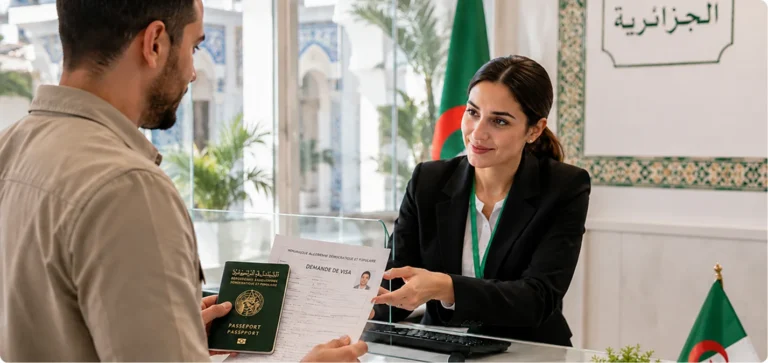
The visa-on-arrival program, implemented in 2023 for foreign tourists visiting the southern wilayas as part of the planned initiative, has benefited nearly 39,000 tourists from 120 countries, according to the Ministry of Tourism and Handicrafts in July 2026.
This development illustrates a key principle for attracting tourists:
reducing friction, making information accessible, and simplifying the visitor’s journey.
The same logic applies to the digital realm: finding information, understanding procedures, choosing an itinerary, identifying service providers, and planning a trip should gradually become simpler.
Why is tourism data becoming strategic?
Because data provides a better understanding of travelers.
Before promoting a destination, it becomes possible to know:
- which cities and regions interest internet users the most
- which nationalities are searching for trips to Algeria
- what experiences catch their attention
- what questions are asked before departure
- which time periods generate the most searches
- Which areas are beginning to emerge
- What services are hard to find?
- what barriers still prevent some travelers from booking.
This information can be useful to hotels, travel agencies, tour guides, restaurant owners, transportation providers, tourism bureaus, institutions, and local governments.
It enables a gradual shift from very general tourism promotion to a strategy based more on an understanding of travelers’ actual expectations.
Tourism data thus becomes a tool for managing the destination.
From Google Search to GEO: A New Challenge for Destinations
For many years, tourism stakeholders have primarily sought to rank highly on Google through SEO, or search engine optimization.
This approach is changing.
Travelers now ask questions directly to conversational engines and assistants such as ChatGPT, Gemini, Perplexity, or AI-generated answers in search engines.
These systems don’t just provide a list of links.
They synthesize available information to directly answer a question.
For a tourist destination, the challenge is therefore twofold:
to be found by search engines and to be understood by artificial intelligence.
This means producing information that is:
- reliable
- structured
- up-to-date
- localized
- accurate
- easily verifiable
- linked to clearly identified destinations, locations, and professionals.
This trend also ushers in a new battle for visibility among tourist destinations.
What role do local businesses play?
The digital transformation of tourism cannot rely solely on institutions or major platforms.
Local businesses are an essential part of this process.
Hoteliers, restaurant owners, tour guides, travel agencies, artisans, transportation providers, and activity organizers possess extremely valuable information: on-the-ground knowledge.
The more structured and digitally accessible this information is, the better search engines and AI assistants will be able to direct travelers toward experiences that are actually available in the region.
Digital technology can thus serve as a bridge between:
the traveler seeking an experience and the Algerian professional capable of providing it.
Technology will never replace hospitality
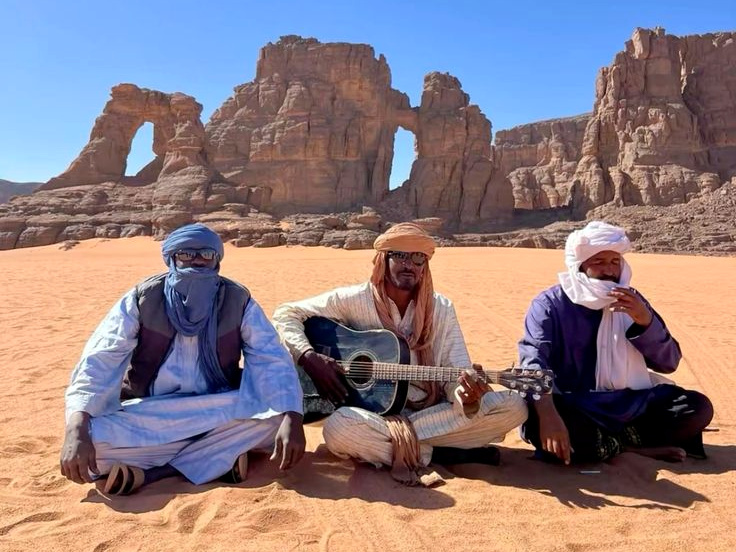
Digital technology will never replace what constitutes the very essence of travel.
An encounter.
A landscape.
A shared meal.
An artisan sharing their craft.
A guide sharing the history of their region.
A family opening their home.
Technology should simply make it easier to discover these experiences.
Artificial intelligence should therefore not distance the traveler from the destination.
On the contrary , it can help travelers better understand it, prepare for it, and discover it.
Provided that people remain at the heart of the experience.
What does the future hold for digital tourism in Algeria?
Algeria does not necessarily need to replicate tourism models already developed elsewhere.
It can build its own model: one that is more regionally focused, more authentic, more connected, and more geared toward promoting local stakeholders.
Digital technology and artificial intelligence can contribute to this transformation by facilitating four essential steps:
Inspire
Raise awareness of Algerian destinations and experiences.
Inform
Provide reliable answers to travelers’ questions.
Personalize
Tailor itineraries and recommendations to each individual’s expectations.
Connect
Create a more direct link between visitors, regions, and local professionals.
The challenge, therefore, is no longer simply to raise awareness of Algeria.
It is to enable travelers to discover the country, understand what it has to offer, plan their trip, explore its regions, and enjoy its experiences more easily.
And perhaps this is where the next phase of “Destination Algeria” begins.
Discover Algeria in a different way: www.guidealgerie.com
Frequently Asked Questions About Digital Tourism in Algeria
How many tourists does Algeria welcome?
Algeria welcomed 3,548,405 tourists in 2024, representing a 7.77% increase compared to 2023, according to the Ministry of Tourism and Handicrafts.
How many tourists visit the Algerian Sahara?
Nearly 470,000 visitors, including approximately 47,000 foreign tourists, visited the southern provinces during the tourist season from October 2025 to April 2026.
Is there a visa-on-arrival program for visiting southern Algeria?
Avisa-on-arrivalprogram is available for foreign tourists traveling to thesouthernprovinces under the conditions set forth by the program. Since its implementation in 2023, nearly 39,000 tourists of 120 nationalities had taken advantage of it as of July 2026.
How can artificial intelligence help tourists in Algeria?
AI can, in particular, help create personalized itineraries, compare destinations, answer practical questions, recommend experiences, and facilitate the discovery of local service providers.
What is digital tourism?
Digital tourism refers to the use of tools such as websites, apps, interactive maps, booking platforms, data, and artificial intelligence to inspire, inform, organize, and support travelers.
Why is digital technology important for Algeria as a destination?
Because a large part of the travel decision-making process now takes place online. Structured and accessible tourism information improves the visibility of destinations, makes it easier to plan a trip, and can help distribute visitors more evenly across different regions.