Why is this ranking revolutionary for Constantine?
The Observer has placed Constantine among its top destinations for 2026, alongside cities such as Kyoto and Medellín. This international recognition highlights:
- Its unique heritage: eight suspension bridges, an Ottoman medina, and breathtaking Roman sites.
- Its preserved authenticity: unlike other Mediterranean cities, Constantine remains off the beaten track.
- Its tourism potential: close to Timgad and Djemila (UNESCO World Heritage Sites), it is the gateway to northern Roman Algeria.
Did you know? Constantine is one of the oldest inhabited cities in the world, with a history stretching back 3,000 years (Numidians, Romans, Ottomans, etc.).

In 2026, Constantine will reach a symbolic milestone. The prestigious British newspaper The Observer has included it in its selection of cultural destinations to watch.
But visiting Constantine is not just a media hype.
It is a chance to discover:
- A city suspended above a canyon
- More than 2,000 years of history
- An exceptional Roman heritage
- A destination still untouched by mass tourism
Constantine in figures
- Average altitude: 640 m
- Population: approximately 450,000 inhabitants
- Depth of the Rhumel Gorges: over 100 m
- Height of the Sidi M’Cid Bridge: 175 m
- Distance between Algiers and Constantine: 430 km
- Distance to Timgad: 130 km
- Distance to Djemila: 100 km
These figures explain the city’s unique character: Constantine is structured vertically.
Why visit Constantine in 2026?
1️. Is Constantine worth a visit?
Yes, for three main reasons:
- A unique urban landscape in North Africa
- A thousand-year-old historical heritage
- Direct access to the most beautiful Roman sites in Algeria
Unlike crowded destinations, Constantine still offers an authentic experience.
2. A city built onvertigo
Constantine is nicknamed the “city of bridges”.
Its emblem: Sidi M’CidBridge
Built in 1912, it connects two cliffs separated by a vertiginous canyon. The crossing offers a spectacular view of the Rhumel Gorges.
Few cities in the world have such a geographical configuration.
What to do in Constantine? The must-sees

Explore the RhumelGorges
The panoramic views are particularly impressive at sunset.
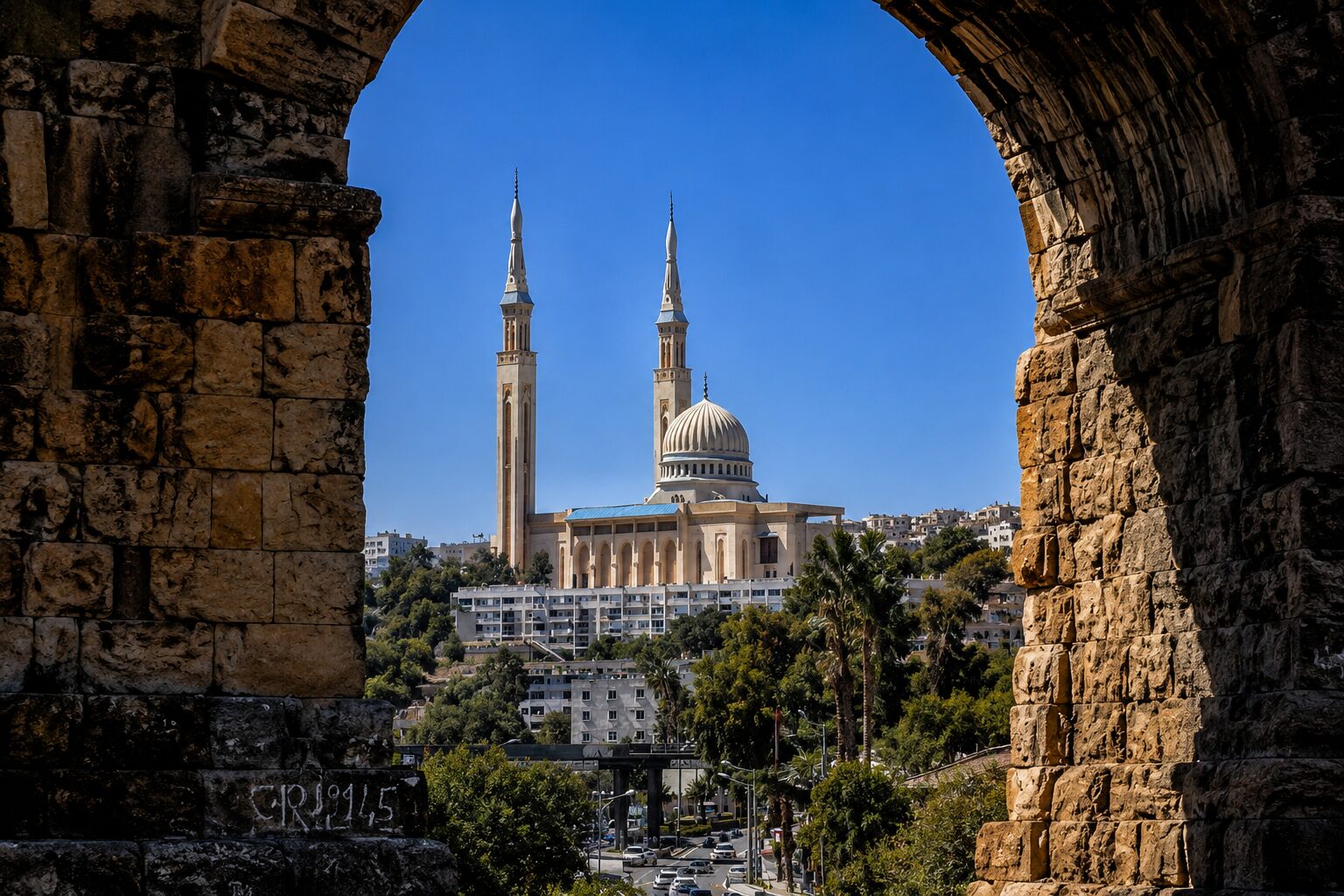
Visit the Emir AbdelkaderMosque
One of the largest mosques in Algeria, a symbol of contemporary architecture.
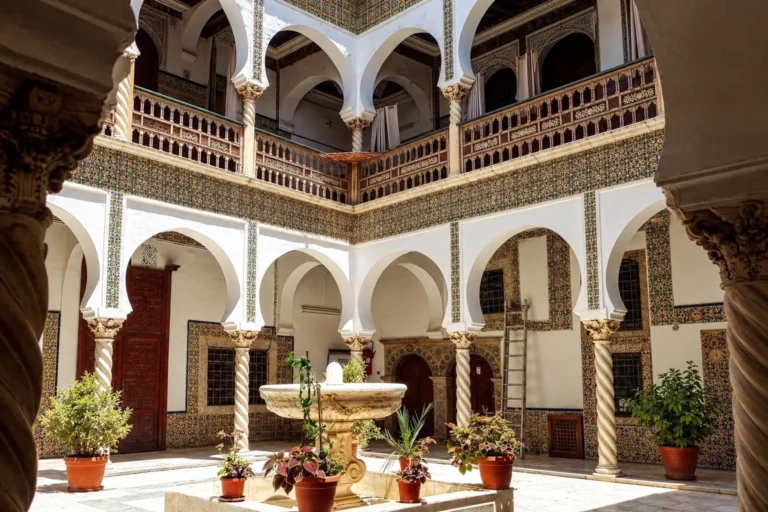
Discover the Ahmed BeyPalace
A richly decorated 19th-century Ottoman palace.
Lose yourself in the medina
- Inner courtyards
- Craft workshops
- Ancient façades
- Authentic atmosphere
Constantine cablecar
Aerial crossing of the gorges, allowing you to appreciate the spectacular topography.
Visit Constantine in 3 days: optimised itinerary
Day1
Sidi M’Cid Bridge, gorges, medina, sunset.
Day2
Emir Abdelkader Mosque, Ahmed Bey Palace, museum, local cuisine.
Day3
Excursion to Timgad or Djemila.
What to see around Constantine?

.jpg)
Timgad –2½hours
Founded around 100 AD by Emperor Trajan, this Roman city, listed as a UNESCO World Heritage Site, is remarkably well preserved.
Djemila –2hours
Formerly known as Cuicul, it is set in spectacular mountainous scenery.
How many days to visit Constantine?
- 2 days: essential
- 3 days: ideal
- 4 days: with excursions
Travel budget for Constantine
| Profile | Estimated budget per day |
|---|---|
| Economical | €40–60 |
| Comfort | €80–120 |
| Premium | €150 |
Constantine remains more affordable than most Mediterranean destinations.
When to go to Constantine?
| Season | Advantages |
|---|---|
| Spring | Ideal temperatures |
| Autumn | Mild climate |
| Summer | Dry weather |
| Winter | Fewer visitors |
Average spring temperature: 18–25°C.
Why recognition by The Observer is strategic
The Observer ranking implies:
- Increased international visibility
- Growing interest from tour operators
- A major opportunity for Algerian tourism
Constantine is becoming a strategic hub for tourism development in eastern Algeria.
Conclusion
Visiting Constantine in 2026 means discovering a city suspended between rock and sky, rich in a thousand years of heritage and now recognised by the international press.
It is establishing itself as one of Algeria’s major cultural destinations.